While many of us associate Abhyang Snan (or Abhyanga) primarily with the early morning rituals of Diwali (Narak Chaturdashi), this traditional Indian oil bath is actually a profound Ayurvedic practice meant for regular self-care.
Far more than just a quick application of fragrant soap, Abhyanga is a systematic, whole-body massage with warm oil, followed by an herbal scrub and a cleansing bath. In Ayurveda, this practice is considered a vital part of Dinacharya (daily routine) to ground the nervous system, nourish the skin, and balance the body's energy.
The Wisdom of the Ancients
The revered Ayurvedic text, the Ashtanga Hridayam, beautifully captures the essence and benefits of this practice in a single, powerful shloka (Sutrasthana 2:8):
अभ्यङ्गमाचरेन्नित्यं स जराश्रमवातहा।
दृष्टिप्रसादपुष्ट्यायुः स्वप्नसुत्वक्त्वदार्ढ्यकृत्॥Abhyangam acharet nityam, sa jara shrama vataha.
Drishti prasada pushtyayuh svapna sutvak tvadardhyakrit.What it means: "One should practice Abhyanga (oil massage) regularly. It wards off old age, exhaustion, and Vata dosha. It bestows clear vision, nourishment, long life, good sleep, and healthy, strong skin."
The Core Benefits
Just as a machine needs regular oiling to prevent wear and tear, our bodies undergo daily stress and friction. Regular Abhyanga offers profound benefits:
- Balances Vata Dosha: Because Vata (air and space elements) resides primarily in the skin, warm oil application deeply soothes an overactive nervous system.
- Anti-Aging & Nourishing: It improves blood circulation, retains skin elasticity, and physically strengthens the tissues.
- Improves Sleep & Vision: Massaging the scalp and feet specifically helps cool the head, improving eyesight and promoting deep, restful sleep.
How to Perform Abhyang Snan
To get the true benefits, the order of application matters.
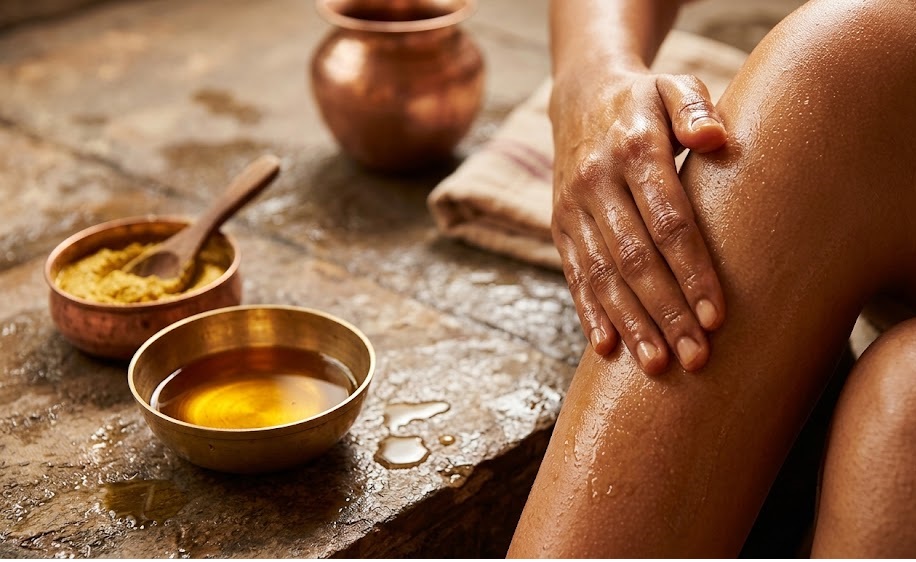
Gently warm organic, unrefined sesame oil (or coconut oil in hotter climates). The oil should be comfortably warm to the touch, not hot.
Begin by applying the oil to your scalp, ears, and the soles of your feet. Then, massage the oil into your entire body. Use long strokes on your limbs and circular motions on your joints, chest, and abdomen.
Allow the oil to penetrate your skin for at least 15–20 minutes. The classic texts suggest this allows the oil to move through all seven dhatus (tissue layers) of the body.
Instead of harsh chemical soaps, apply a natural ubtan made of ayurvdic herbs powder mixed with a little rosewater or milk. This gently exfoliates the skin and binds to the excess oil.
Rinse off the scrub with lukewarm water. You should emerge from the bath with your skin feeling deeply moisturized but not greasy.
Whether you choose to practice it daily as the Ashtanga Hridayam suggests, or make it a special weekend ritual, Abhyang Snan is a beautiful way to show gratitude to your body.